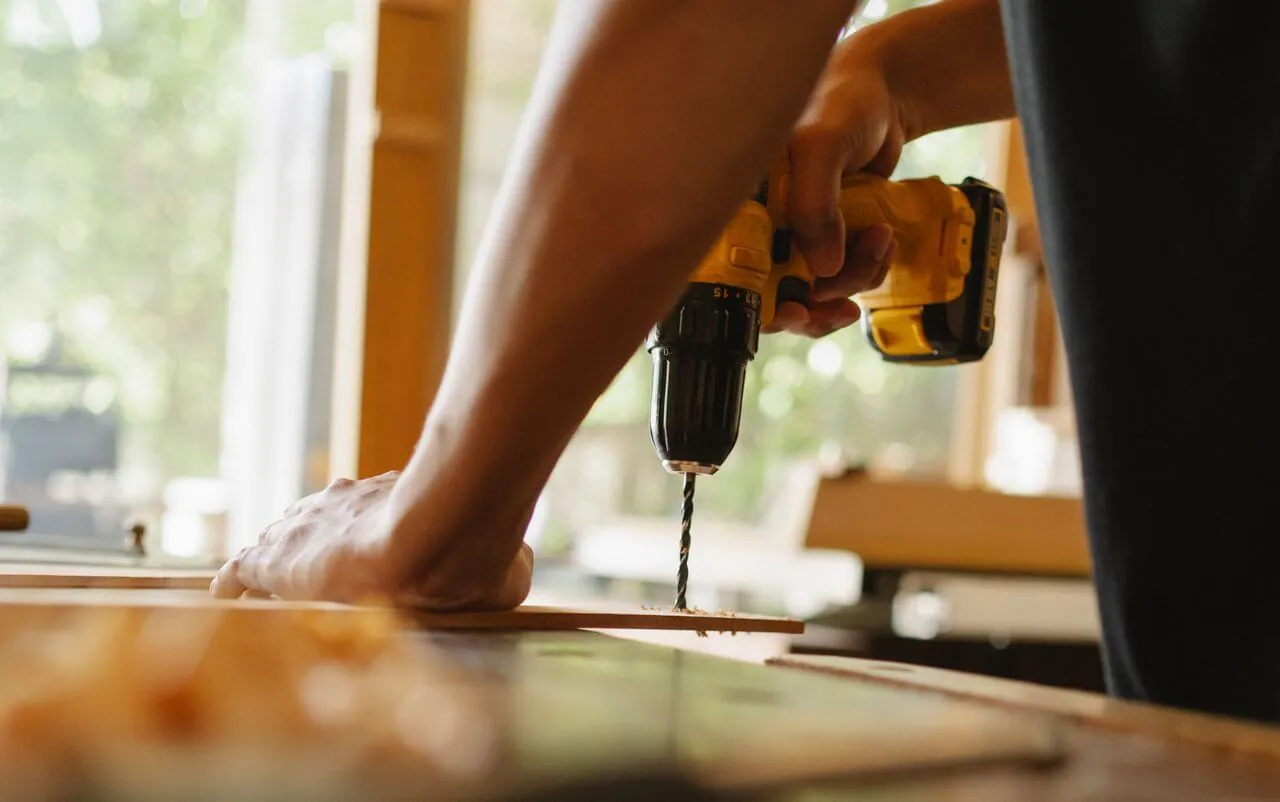
Picture hanging in Fulham, level and secure
Picture hanging sounds like a job for a hammer and a nail, and sometimes it is. But a large framed print, an antique overmantel mirror or a run of twelve frames up the stairs needs planning, the right fixing for the wall and a good eye for spacing.
For a single piece, the usual rule of thumb is to put the middle of the picture near eye height, then adjust for the furniture below it. For a gallery wall, we lay the frames out on the floor first, or tape paper templates to the wall, so you can see the arrangement before any holes go in.
Our picture hanging in Fulham covers homes there and across Parsons Green, Chelsea and Earls Court, from single prints in rental flats to full stairways of family photos in terraced houses.
Picture rails in period rooms
Many Victorian and Edwardian rooms still have a picture rail, a wooden moulding that runs around the room a little below the ceiling. Pictures hang from hooks that sit over the rail, on cords or chains. Nothing gets drilled into the wall, and you can move frames around as often as you like.
If your rooms have picture rails, they are worth using, particularly in a rental or on fragile old plaster. We can supply and fit hooks and cords or chains, adjust the drop so frames line up, and refix a loose section of rail.
Jobs we cover
- Single pictures and large artwork
- Gallery walls and stairway arrangements
- Heavy mirrors, including overmantel mirrors
- French cleats for very heavy pieces
- Picture rail hooks, cords and chains
- Floating shelves and picture ledges
- Bathroom mirrors and cabinets on tiled walls
- Filling old holes before hanging
Heavy mirrors and the wall behind them
Big mirrors are heavy, and the glass makes a fall dangerous. The fixing has to suit both the mirror's weight and the wall it is going on.
Chimney breasts and outside walls in Fulham's older houses are usually solid brick under plaster, which takes a heavy mirror well with masonry plugs set into the brick. Inside walls in older homes are often timber studs covered with lath and plaster. LABC notes that most pre 1930s houses have lath and plaster ceilings, and the same construction turns up in partition walls. On those walls, the fixing must go into a stud. Plasterboard walls, common in conversions and newer flats, need heavy duty cavity fixings or a stud.
For the heaviest pieces, a French cleat is often the strongest option. That is a pair of timber strips with matching angled edges, one fixed to the wall and one to the mirror, which hook together and spread the load along the whole width.
A mirror with built in lights in a bathroom is different. Adding to or changing a circuit in a bathroom is notifiable electrical work, according to Hammersmith and Fulham building control, so the wiring is done by a registered electrician who can self certify the work. We arrange it.
Display shelves and ledges
Picture ledges and floating shelves are a good way to show off frames without a pattern of holes. The catch is that shelves carry more weight than people expect once they fill up. On brick, a floating shelf is fixed with long rods into the wall. On a stud wall, it needs to hit the studs. On plasterboard alone, keep it for light things only.
If you are after full alcove shelving or built in storage, our carpentry page covers that.
Renting, leasehold flats and textured walls
Tenancy agreements often say what you can fix to the walls, so check yours and ask your landlord first. Picture rails, where you have them, avoid the question entirely, which is why they come up so often in picture hanging in Fulham rentals. In a leasehold flat, hanging pictures inside your own home is not usually an issue, but your lease is the place to check if you are unsure.
Some older walls and ceilings have a swirled or stippled textured finish. HSE says asbestos can be found in any building built before 2000, and it has specific guidance on drilling through textured coatings. Mention it before the visit so it can be checked first.
What to have ready
Get everything unwrapped and leaning against the wall where it will go.
- Each piece unwrapped, with any hanging hardware still on the back
- A rough idea of the layout, or photos of arrangements you like
- The weight of any large mirror, if you know it
- Fragile or valuable pieces pointed out at the start
- Landlord permission if you rent
Common hanging problems
Frames that tilt forward usually hang from a loose wire. Swapping the wire for two D rings (small metal loops screwed to the back of the frame) lets the frame sit flat against the wall and stay level.
Nails hammered into old lath and plaster can crack the plaster around them or simply pull out. Small pictures are better on proper picture hooks with fine pins, and anything heavier needs a drilled fixing.
Picture hanging in Fulham often starts with someone else's mess. If you have a wall full of old holes from the last owner, we fill and sand them before hanging, so you start with a clean wall.
Who this suits
- New owners unpacking art and mirrors after a move
- Tenants who want to use picture rails rather than drill
- Collectors with heavy or valuable frames
- Families putting up a stairway of photos
- Landlords dressing a flat for viewings
Common questions
Can you hang pictures without drilling the walls?
If your rooms have a picture rail, yes. Pictures hang from hooks over the rail on cords or chains. Adhesive strips work for light frames on smooth paint, but they can pull paint off when removed.
Can you hang a heavy mirror on plasterboard?
Yes, with the right fixings. Heavy mirrors should go into the timber studs behind the board, ideally on a French cleat that spreads the weight. Cavity fixings alone are only for lighter pieces.
How high should I hang my pictures?
A good starting point is the middle of the picture near standing eye height. Above a sofa or sideboard, leave a hand's width or so between the furniture and the frame. We can hold pieces up so you can see before drilling.
Can you plan and hang a gallery wall?
Yes. We lay the frames out first, often with paper templates on the wall, then hang them with even gaps. Bring photos of layouts you like and we will work from those.
Can you fit a bathroom mirror with lights?
We can fix the mirror itself. Wiring a lit mirror in a bathroom can be notifiable electrical work, so that part is done by a registered electrician who can self certify the work. We arrange it.
Can you drill through bathroom tiles?
Yes, using a tile drill bit and masking tape to stop it slipping. We check for pipes and cables first, as bathroom walls often have both behind them.
Can you fill the holes from old pictures?
Yes. Old plugs come out, the holes are filled and sanded, and the wall is left ready to paint.